

Author: Andrew Fookes
Andrew Fookes is a part-time writer living in the inner-eastern suburbs of Melbourne, Australia.
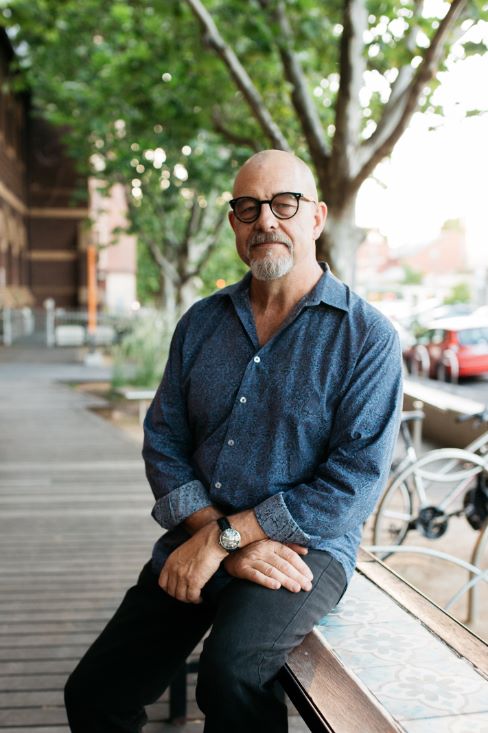
Biography
I’m a part-time writer living in the inner-eastern suburbs of Melbourne, Australia. I served for over two decades in the Australian military, and then worked for another two decades as a business and logistics consultant. I have degrees in Philosophy, Business, Information System Design and Strategic Studies from universities in Australia and the UK; I’ve served short stints on academic staff at The Australian National University and The University of Newcastle.
I’m married to Pippy, with two amazing adult daughters, two fine young men as sons-in-law, two beautiful granddaughters and a brand new grandson. I have many more interests than I have time to indulge them, so I generally stick to the basics: great food, lovely wine, all kinds of music, cinema, reading and writing when I can (see also Writing Process).
My debut novel, In Body, In Mind, was published in 2019, a work of philosophical literary fiction representing over thirty years’ writing and editing. In May 2025 I released my second novel, In Living Memory, and I’ve begun work on the third, In Absentia Lucis. I have two more novels after that on the drawing board.
Even though my debut novel took thirty years to produce, I still consider myself new to creative writing. At school I was told I had promise, but forty years of academic, business and public sector writing had almost beaten out of me whatever spark of creativity there might once have been. Almost.
I’ve now discovered it’s never too late to finish what might have begun long ago as another story, with another theme, being written by another person of the same name. When I started, I couldn’t have written stories anything like what are now In Body, In Mind and In Living Memory. Significant experiences in life construct your self, your character; you have to live them before you can credibly write about them. Imagination alone can’t create authentic meaning.
Books


My debut novel, In Body, In Mind was released at the end of October 2019; it’s the first in a thematic collection of five books, the second being In Living Memory, released in May 2025, in which I write as Sam Kane. The third book is In Absentia Lucis, which is in development now, and scheduled for release in 2028.
The final two books in the collection are In Medio Dierum, in which I write as Catherine Dean, and In The Shadow of Hope (provisional title). These are provisionally scheduled for release in 2032 and 2035 respectively.
Influences
Several readers of In Body, In Mind have asked me about what influenced me to write a novel such as that one. It’s not an easy question to answer, and certainly one that defies a quick and simple response. In addition to baseline genetic factors, I believe there are some structural influences, that is, influences from my education, my environment, my employment, and the interplay of all three that shaped my approach to writing, my style of writing, and the subject areas that interest me. Add to these a myriad of creative influences I’ve encountered over the past six decades, and for better or worse, that’s what built me as a writer, and indeed, as a person.
If you’re really, really interested in reading about the nature of these many influences, please click here. It does go on a bit, but it was an extremely interesting exercise to compile it.
Interviews
No Interviews posted yet.
Writing Process
For virtually all the time I was writing my first novel, I had really very little idea of what I was doing. My aim was to just get the story out of my head, and then worry about turning it into a book afterwards. Even though the technical faults in my first draft were so numerous and so pervasive, to the extent that fixing them took me over three years, I still believe my instinct was correct.
Over the decades, I tried many things to keep the story moving forward. In the interests of brevity, I won’t describe what hasn’t worked for me, because the list is extensive. And now that I’ve finished a second book and begun a third, I’m more certain about what works.
Quite probably one of the most useful things I’ve learned is to stay Zen about interruptions. I’d found that I’d still be mulling over how annoying it was to be interrupted, long after the interruption had ceased. Particularly for part-time writers, interruptions are normal, so we need to learn to let them pass by without rancour or regret. And if we’re smart about when we write, we can minimise the probability of being interrupted.
I’ve learned to recognise what writing opportunities work best for me. For almost five years I spent over eight hours every week driving to and from Canberra. By driving when traffic was light, I found I could use much of that time thinking about my story. If I needed to make a note of something, I’d hit speed dial on the phone to leave a brief, cryptic message on my own voicemail, then write out the message in full when I arrived at my destination. Easy.
Recently, I’ve found that by getting up at 5am a few mornings a week, I can get a couple of hours’ quality writing time while my brain is fresh-ish. Though I’m by no means a morning person, I know that even if I don’t get to do anything else that day, I’ll have done two hours’ worth.
When I first began creating characters all those years ago, I ‘cast’ my story with real people I knew of, actors and singers mainly, who looked and sounded like how I thought my characters should look and sound. I even named the characters after them with the idea of changing later, but the characters inhabited their names and their identities stuck. In this way, I was able to build a strong and consistent sense of their appearance, their mannerisms, even their voices, while I got to know them.
Finally, I’ve learned that the best way to learn the technical discipline of writing is through editing. And editing. And editing. By being forced to fix your own mistakes, you’re less likely to make them again. By knowing when you write a scene that you’re probably going to excise it at the first opportunity, you’ll think again about how to achieve the same purpose in a more enduring way. By treating every adverb with suspicion, you’ll only use those which are necessary. By being clear about whose head you’re in at the opening of every scene, you’ll be able to report what’s going on with a more consistent perspective.